![The 18 Best Exercises for Lymphatic Drainage [2026]](https://cdn.sanity.io/images/n447j2xf/production/97fd5b6fde80019cc31ef0a5c3933e7359536bd7-1920x1059.png?w=900&auto=format&q=75)
Unlike your heart, your lymphatic system has no pump.
Your heart pushes blood automatically. But your lymph fluid only moves when you move.
And most people never get it flowing.
That's why you wake up puffy, bloated, and heavy for no obvious reason.
Overnight, your lymph stagnates, toxins accumulate, and inflammation builds quietly. You drink water, you eat clean, and you still feel swollen.
These 18 lymphatic drainage exercises are the exact routine I do every morning as part of my journey to heal chronic back pain and lose 70 lbs naturally.
The whole thing takes about 20 minutes, requires zero equipment (except a jump rope at the end), and I've organized them from gentle activation to high-intensity finishers so you can start wherever your body is right now.
What is the lymphatic system (and why does it get stuck)?
The lymphatic system is a network of vessels, tissues, and organs that flush waste, toxins, and excess fluid from every cell in your body.
Think of it as your body's trash collector. If the drain is clogged, the garbage piles up.
Unlike your circulatory system (which has the heart pumping blood 24/7) your lymphatic system has no pump.
It relies entirely on your movement, breathing, and muscle contractions to keep fluid flowing.
So when you sit at a desk for 10 hours.. sleep for 8.. and barely move in between.. your lymph stagnates. That's when you notice it:
- Facial puffiness
- Swollen ankles
- Bloating that doesn't match what you ate
- Brain fog
- Skin breakouts
- And that heavy, sluggish feeling where your body just drags
Those are all signs of lymphatic congestion.
The good news? Research confirms that physical activity and deep breathing directly stimulate the lymphatic system.
You just have to move!
The benefits of lymphatic drainage exercises
When your lymphatic system is actually flowing the way it should, the effects show up fast. Here's what I've experienced personally, and what a lot of people who start this routine report:
- Reduced puffiness and water retention.Within the first week, my face and body looked noticeably less swollen. Your body is finally clearing the fluid that's been sitting there.
- More energy and less fatigue. When lymph stagnates, toxins build up and your energy drops. Once you get things moving, it's like unclogging a drain - everything flows better.
- Less inflammation. A well-functioning lymphatic system helps eliminate the waste that drives chronic low-grade inflammation. For me, this was a huge part of why my back pain went from debilitating to basically zero.
- Stronger immune function. Your lymph nodes filter out bacteria, viruses, and other threats. When the system is sluggish, that filtration slows down and you get sick more often.
- Clearer skin. Breakouts, rashes, dull tone - a lot of skin issues trace back to toxins not being cleared efficiently. Once the lymph starts moving, your skin gets the benefit.
- Lower cortisol and a nervous system reset.The gentle, rhythmic movements help calm your nervous system. I'm in a noticeably better mood on days I do this.
- Improved circulation and muscle definition. As water retention decreases and circulation improves, you start to see more tone showing through. Less bloat, less puffiness.
Doing this consistently has made a huge difference in my body tone, energy, and my skin.
How to do these 18 lymphatic drainage exercises
The ideal amount for each exercise is 50-100 reps, or 30-60 seconds. But if that's too intense right now, that's totally fine. Don't overdo it in the beginning.
- Target: 50-100 reps or 30-60 seconds per exercise
- Beginner: Start with 10-30 seconds each and ramp up over time
- Total routine: ~20 minutes for all 18 exercises
- Short on time: Even a quick 5 minutes with a handful of moves makes a difference
Before you start:
Take 5-10 deep diaphragmatic breaths.
Breathe in through your nose, expand your belly (not your chest), hold for 2 seconds, exhale slowly through your mouth.
Deep breathing creates pressure changes in the thoracic cavity that physically pump lymph fluid through the central vessels.
Every exercise below works better when you prime the system with breath first.
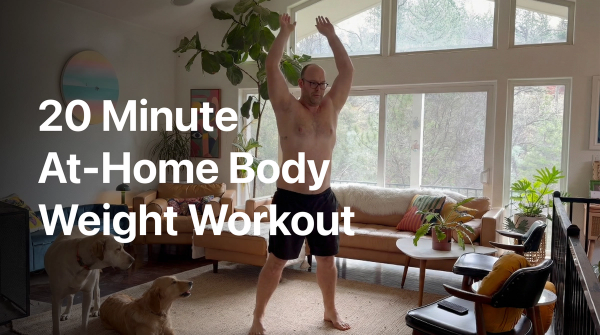
If you just want to hit play and follow along with me, you can find the full follow-along video here and do the routine in real time. There's also a slow day version for a gentler pace.
1. Lymphatic hops
We start with small, gentle hops in place. Keep your feet close to the floor, knees soft, and arms relaxed at your sides.
We're really just trying to bounce here. We're not trying to jump and get as much air as possible. The point is to get bounciness and springiness in your knees. The movement should feel light, not intense.
If you're having a hard time jumping or you can't get off the ground, that's totally fine. You don't need to. Keep your feet on the floor and just do a nice springy bounce where your knees are dropping down and you're getting good movement, but you don't actually need to get any air.
Bouncing activates fascia, stimulates lymph drainage, and pumps fresh fluid through the tissues. It's the simplest way to wake up the whole body.
2. Body waves
Stand tall and swing your arms over your head, then swing them down as you drop into a shallow squat. Roll your body from top to bottom - chest lifts, upper back rounds, mid-back, lower back. Reverse the motion to stand back up.
You don't have to drop down too much. Just try to get a little bit of bounce in your low back and your knees.
Keep your head steady. You don't want to be flinging your head up and down - that's a recipe for dizziness. Your face should stay facing straight forward and not be swinging around.
These soft spinal waves release tension, reset the nervous system, and create full-body circulation.
3. Arm swings
Swing your arms loosely forward and backward at shoulder height. You're simply swinging one arm at a time back and forth.
Keep your shoulders relaxed and let the arms move freely. Don't worry about speed - just go as fast as feels good for your body. If it feels too fast, slow it down. The speed doesn't matter.
This looks incredibly easy, but don't be fooled. My shoulders started burning after 30 seconds when I first started this. I couldn't do them very quickly for the first couple of days, but now I'm able to pick up the pace. Your body will get used to it over time. If you need to stop and shake your arms out, do it.
Loose arm swings massage the lymph channels around the belly and hips.
4. Trunk twists
Stand with your feet hip-width apart and twist your torso side to side, letting your arms swing naturally across your body.
Get into a "ready position." You don't need a full squat, and you don't want your back arched, but you want to be slightly leaning forward. You can face your head like you're looking down at the ground in front of you.
The key here is to keep your feet still. You don't want to be twisting your legs. Keep your hips and legs facing forward and just twist in the trunk.
Twisting wrings out stagnation from the core and organs, stimulates the waist and lymph channels through rotation, and improves digestion.
5. Arm circles
Extend your arms out to the sides at shoulder height. Make small circles moving forward.
Often, we're trained to do arm circles using our muscles to "place" the arm. That's not what we're doing here. We're really swinging our arms using momentum. You shouldn't be pushing with your arms - try to get into a good sway and flow.
This one is way harder than it looks. Everyone thinks it's easy, but by the end of the minute, I'm burning. I couldn't even do a full minute for the first couple of days - I'd have to take breaks. If it's the same for you, don't overdo it. Just work your way up to it.
6. Bent over back shakes
Stand with feet shoulder-width apart and knees slightly bent. Hinge forward at the hips, letting your upper body, head, and arms hang heavy toward the floor. Hang your arms down right in front of you.
From here, you're just going to "bounce your butt." The idea is that we're trying to get blood flow into the low back area. Think of it like you're a pump, and you're just pumping blood into that low back.
I don't do these for a full minute all the time because I have a back problem, and these start to tire my back out. So go for as long as you can. If you can do a minute, awesome. If you can only do 45 seconds (like I often do), that's fine too.
7. Arms up and down
Lift your arms up and shake them out loosely - imagine they are cooked spaghetti. Then, sway your body side to side so your arms slap against your torso.
These are a little weird and awkward. I'd never done anything like this before. You're trying to slap your body, but you are not using your arm muscles to do it. Your arms should be completely limp, and you use the sway of your body to fling them.
It takes practice. I still feel like I'm doing it wrong sometimes. But when you get it right, you get a nice slap on your chest right in the collarbone area. My upper body is usually pretty red afterward, which is cool because it means we're getting good blood flow.
This exercise pumps lymph through the chest and underarms, activates lymph nodes in the armpits, and clears blockages in the upper body.
8. Golf swings
Stand with feet shoulder-width apart. Swing your arms together side to side like a pendulum or a golf club.
When you first start, you might want to "throw" your arms backward to the side. That feels right, but it's not. You should think of it like a pendulum motion, almost like you're throwing your arms straight up to the side. Get in front of a mirror to see what you look like.
Unlike the trunk twists, here you do want to twist your legs. Allow your body to twist all the way around to protect your knees.
9. Marches
March in place, lifting one knee at a time. Swing the opposite arm to the leg like natural walking, and slap your knee as it comes up.
When your arms go back, try to fling them back so you get a stretching motion in your upper back (thoracic spine).
This one takes coordination. I was very awkward with it in the beginning - I felt like I was leaning back too far. I had to force myself to lean forward a little bit. It's great for coordination and balance on top of just being a good workout. The first couple of days, my shoulders burned, but now I can finish without dying.
Marching encourages circulation in the legs and reduces that heavy feeling in the lower body.
10. Tiptoe arm swings
Swing your arms forward and up while simultaneously rising onto your tiptoes. Drop your heels back down as your arms swing down.
This is very similar to the arm swings from earlier, but instead of staying flat-footed, you go up on your tiptoes as far as you can. The purpose here is really about your feet, calves, and toes.
This is a sneaky calf killer. My wife was doing this workout with me behind the camera, and around the 45-second mark, she had to drop because her calves were burning so much. It doesn't look hard, but it burns.
11. Twist the waist
Stand tall and twist your waist left and right in a controlled motion. Let your arms hang completely dead - they should be limp.
You're going to twist back and forth so your arms slap your body. Your feet should be twisting too. You want to do a full twist all the way around.
This one feels really nice. It's kind of like a break in the workout. It lets your body cool down a little bit because coming up soon, we're getting into the hard part.
12. Ballet squats
Now we're into the more intense exercises. These next few are more like actual workouts compared to the gentler movements above.
Take a wide stance with your legs spread fairly wide, wider than your shoulders. Point your toes out slightly. Drop down while swinging your arms down, then push up swinging your arms up.
Try to keep your back straight - you don't want to be bending over.
Someone gave me feedback in the comments saying that I'm "hinging" my back when I come down. I think that's just because my hips are really tight. I'm trying as hard as I can to keep my chest and trunk straight up, but I can't seem to stop hinging. That's something I've got to work on. Try to keep your back as straight as possible. Don't do what I'm doing.
Ballet squats train your hips, general balance, and strengthen the lower back.
13. Wide-arm step backs
Step one foot back into a shallow lunge while sweeping your arms wide open. Step back to the center, clap your hands together, and switch sides.
This one is a killer. It looks easy, but especially after all the arm circles, my arms are always burning.
It's really awkward at first - I never do movements like this. If it's awkward for you, just slow it down. Focus on getting the right balance and coordination first. Don't worry about speed.
14. Backward step body waves
Step one leg back into a lunge while performing a body wave from earlier in the workout. Lunge back, drop your knee down, and throw your hands over your head.
This is where the workout starts to get more intense. If you're having a hard time dropping your knee down in the lunge, don't do it. Just take a step back.
For my back, this one feels like I have to be careful. I'm able to drop down a little bit, but I work my way up to it. So be careful with this one.
15. Pushups
Now we hit a minute of pushups.
I'm doing about 30 of these in total within the minute. I do a set of 10, then I'm dead, so I take a break. Then I do another 10. I'm essentially trying to do as many as possible before I just can't push up anymore.
If you can't do standard pushups, you have options. Modified: do them on your knees. Couch: put your hands on the couch and do them there. Wall: go all the way up to a wall and just go down as far of an angle as you can handle.
Start with whatever is doable. Even if you can only do one or two, do it. We're trying to build upper body capacity here.
16. Jump rope
This is the finisher. We're going to jump rope for one minute straight.
If you don't have a jump rope, you can skip this, sub it with another movement (like jumping jacks or planks), or just hop in place.
I use a weighted jump rope. For the first couple of days, I was doing double jumps (bouncing twice every time the rope went around). The first day I tried single jumps, it was brutal. After I finished this minute, I was hands on my knees, huffing and puffing, full body sweat. It's a really great workout.
17. Bounces with hip rotation
This is the same gentle bounce from the lymphatic hops, but now you're adding a hip rotation. As you bounce, let your hips circle around - almost like you're doing a slow hula hoop while you bounce. You're not trying to do anything crazy here. Just nice, easy circles while you keep that same soft, springy bounce going.
The idea is to free up the pelvis, which is where a lot of stress and emotions build up. We hold so much tension in our hips and most of us don't even realize it. Adding that rotation helps loosen everything up and gets the lymph moving through the lower body.
This one felt a little awkward for me at first - coordinating the bounce and the hip circle at the same time took a couple of tries. But once you find the rhythm, it feels really good. Don't overthink it. Just bounce and let your hips move.
18. Lateral lunges
Stand with your feet together, then take a big step out to one side and drop your hips down into a side lunge. Push off that foot and come back to center, then do the same thing on the other side. Keep alternating back and forth.
You don't need to go super deep - just enough to feel a nice stretch in your inner thighs and get your hips opening up. Keep your chest up and your back as straight as you can. The foot you're stepping out on should stay flat on the ground, and the other leg stays straight.
This one is great because most of the other exercises are very forward-and-back or up-and-down. This is the one that gets you moving side to side, which your body really needs. We don't move laterally enough in our day-to-day lives, so this helps wake up muscles and lymph pathways that get neglected.
How to get started
First time? Here's what to expect
You might feel tired, get a mild headache, or feel off afterward. That's normal - it means your lymph is finally moving and your body is shifting waste.
Drink lots of water, stretch, and give your body time to adjust.
This fades once you do it regularly.
When and how often
I do this once a day in the morning because it sets me up with good energy for the rest of the day.
But you can do it anytime - morning, evening, or just a couple times a week.
Think of the 18 exercises as a menu, not a mandate. Short on time? Pick a handful of moves. Have 20 minutes? Do the full routine.
Something is better than nothing!
Simple progression plan
Some people can just jump straight into 60 seconds per movement. But in case that's too intense, you can start with the following progression:
- Weeks 1-2: 10-30 seconds per exercise
- Weeks 3-4: 30-60 seconds per exercise
- Week 5 onward: Full 50-100 reps or 60 seconds each
If you'd rather not think about what comes next, you can follow along with the full Wildcard Wellness follow along workout video on Youtube- just press play and do the entire routine in real time.
On tough days, there's a slow day version at a gentler pace.
Daily habits that help
Movement is the biggest lever, but a few simple habits amplify the results:
- Stay hydrated. Your lymph fluid is mostly water. When you're dehydrated, it thickens and slows down.
- Eat real, whole food. The less processed junk your body has to deal with, the less work your lymphatic system has to do. You can read the full breakdown of how I'm eating, including specific meal ideas.
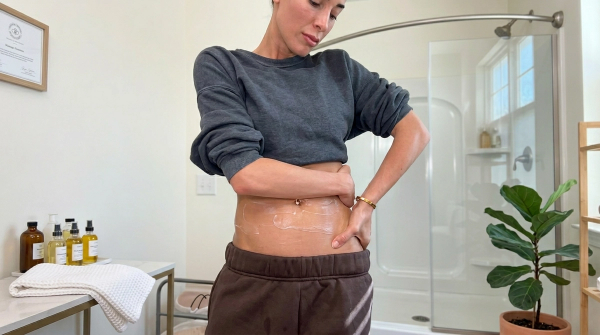
- Try dry brushing before your shower. Natural-bristle brush, stroke toward the heart, 2 minutes. Stimulates surface lymph flow.
- Don't sit for long stretches. Even 2 minutes of walking every hour helps. I set a phone timer to remind myself.
When to see a doctor
These exercises are gentle and safe for most people, but certain conditions require medical clearance first. See a doctor before starting if you have:
- An active blood clot
- Cellulitis or an active infection in a swollen area
- Congestive heart failure
- Ongoing cancer treatment
- Diagnosed lymphedema (these exercises can complement treatment but shouldn't replace guidance from a certified lymphedema therapist)
This routine is designed for general wellness. If you suspect you have lymphedema (persistent, worsening swelling, especially after surgery), please get evaluated by a specialist.
Final thoughts
I started this routine to heal chronic back pain and lose weight.
The lymphatic drainage was a bonus I didn't expect. Within the first week, my face and body looked less puffy. My energy went up. My head felt clearer. I felt lighter and more mobile than I had in months.
You don't need to do all 18 exercises perfectly on day one.
Pick a few, set a timer, and move. Your lymphatic system has been waiting for you to give it a reason to work.
Give it 5-10 minutes tomorrow morning and see how you feel!
Here are all the free resources to help you get started:
- Full workout guide & movement breakdown
- Full follow-along workout video - press play and do the routine in real time
- Slow day follow-along workout video - gentler pace for tough days
- Exercise list with visuals (quick reference) - pull up on your phone during the workout
- My diet & how I'm eating - full breakdown of the eating philosophy
- Workout Spotify playlist - music to get you through the hard parts
If you do end up giving it a try (or have any questions), please send me DM me on Instagram!