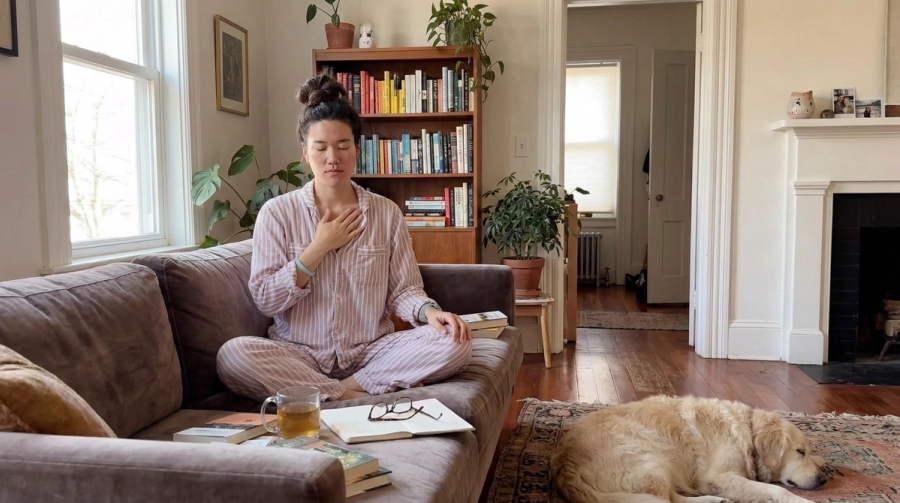
You're eating well. You're moving more. But you still feel puffy, heavy, and sluggish - and you can't figure out why.
A lot of times, that lingering puffiness and fatigue has nothing to do with your diet or your workout. It's your lymphatic system - your body's built-in waste-removal network - not draining properly.
When lymph fluid stagnates, toxins build up, inflammation lingers, and your body holds onto fluid it shouldn't be.
The fix is simpler than you'd think.
This guide walks you through a 3-minute lymphatic drainage massage you can do at home, with the 9 key pressure points that make the biggest difference.
What Is Lymphatic Drainage Massage?
Lymphatic drainage massage is a gentle, light-pressure massage technique that stimulates your lymphatic system to move stagnant fluid, reduce swelling, and support your body's natural waste-removal process.
It is not deep tissue work - the lymphatic vessels sit directly below the surface of your skin, so the pressure is barely more than a skin-stretch.
Here's how your lymphatic system works:
- It's your body's drainage and filtration network - it collects waste, excess fluid, and toxins from your cells, filters them through lymph nodes, and returns clean fluid to your bloodstream
- Unlike your cardiovascular system,your lymphatic system doesn't have its own pump - lymph fluid moves through muscle contraction, breathing, physical movement, and gentle external pressure
- If you're not moving enough, that fluid stagnates - waste builds up, and you feel puffy, heavy, and inflamed
And this isn't new - techniques to stimulate lymph flow have been rooted in Ayurvedic medicine, Traditional Chinese Medicine, and ancient Egyptian healing practices for centuries.
Benefits Of Lymphatic Drainage Massage
Consistent lymphatic drainage supports everything from swelling reduction to energy and digestion.
Here's what the research points to:
- Reduces swelling and fluid retention- the primary clinical use, especially forlymphedema after breast cancer surgery
- Decreases puffiness in the face, fingers, and ankles
- Improves digestion and reduces bloating
- Boosts energy and lowers fatigue throughout the day
- Clears up skin- fewer breakouts, better tone
- Relieves that "heavy, swollen" feeling after long days of sitting or standing
- Supports post-surgical recovery - including cosmetic procedures like liposuction
- Helps with chronic conditions like rheumatoid arthritis, fibromyalgia, and chronic venous insufficiency
- Improves circulation and muscle definition over time
Most people who do this consistently notice a difference in their energy, body tone, and skin within the first week.
It sounds too simple to work - until you actually try it.
Common Signs Your Lymphatic System Needs Attention
If you're puffy, bloated, fatigued, or stiff without an obvious explanation, sluggish lymph flow could be a contributing factor.
Here are some of the most common signs of lymphatic congestion:
- Facial puffiness (especially in the morning)
- Swollen fingers, ankles, or legs
- Tender lymph nodes
- Bloating that doesn't match what you ate
- Brain fog or head pressure
- Sinus congestion
- Getting sick more often than usual
- Skin issues like breakouts, rashes, or dull tone
- Clothes feeling tighter without actual weight gain
- Cold hands or feet
- Feeling heavy or swollen after sitting or standing all day
- Problems digesting fat, or bloating after eating
These symptoms overlap with plenty of other conditions - lymphatic congestion isn't always the culprit.
But if you're nodding along to several of these, the three-minute routine below is worth trying.
How To Do Lymphatic Drainage Massage At Home
You can do a full lymphatic drainage self-massage in about three minutes by following 9 pressure points in a specific order, using gentle circular motions.
Some simple rules make this massage super easy to follow:
- Always start at the collarbones - that's the main drain. Open it first, then work your way down.
- Always move fluid toward the collarbones. Neck goes down, legs go up.
- Keep the pressure extremely light. You're gliding across the skin, not digging.
- Use small circular rubs, about 10–20 per area, on both sides of the body.
1. Collarbones
For this one, you'll place your fingers on your collarbone - the bony ridge that runs horizontally across the top of your chest, just below your neck. One finger above, one finger below.
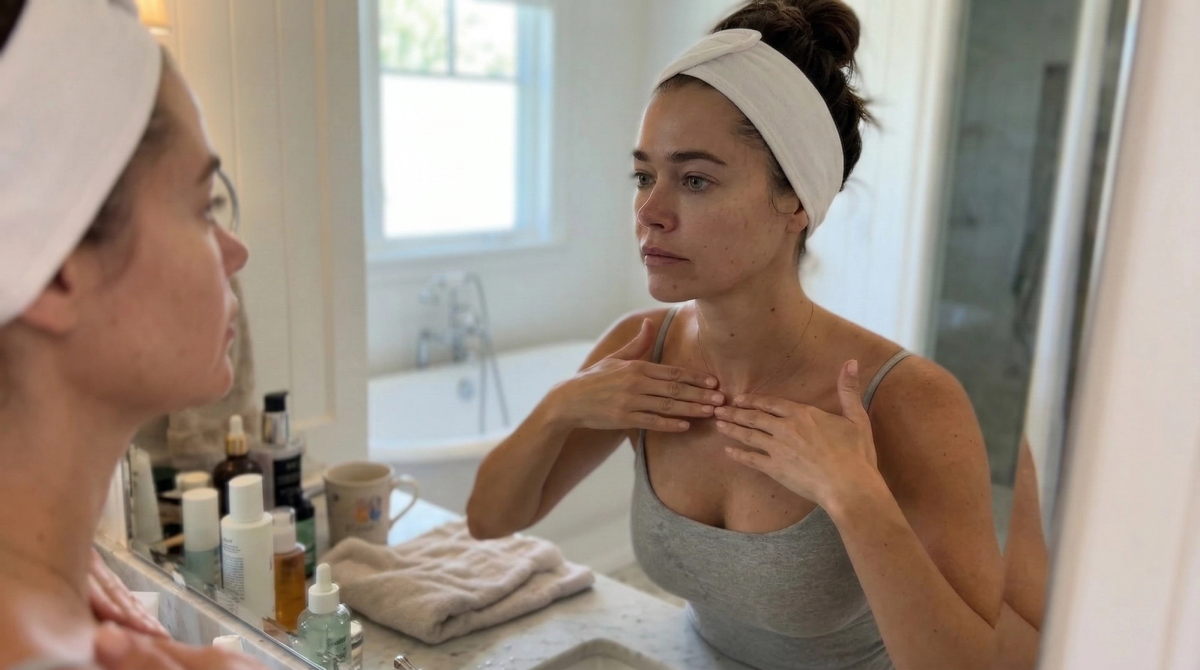
Gently rub in one direction 10 times, then move to the other side and do the same thing. Circular motions or just back and forth - it doesn't really matter.
This is the main exit point where all your lymphatic fluid drains. Always start here - if this drain isn't open, nothing above it can clear properly.
2. Behind The Ears
For this one, you'll find the spot right behind each ear - the soft area where your skull meets your neck.
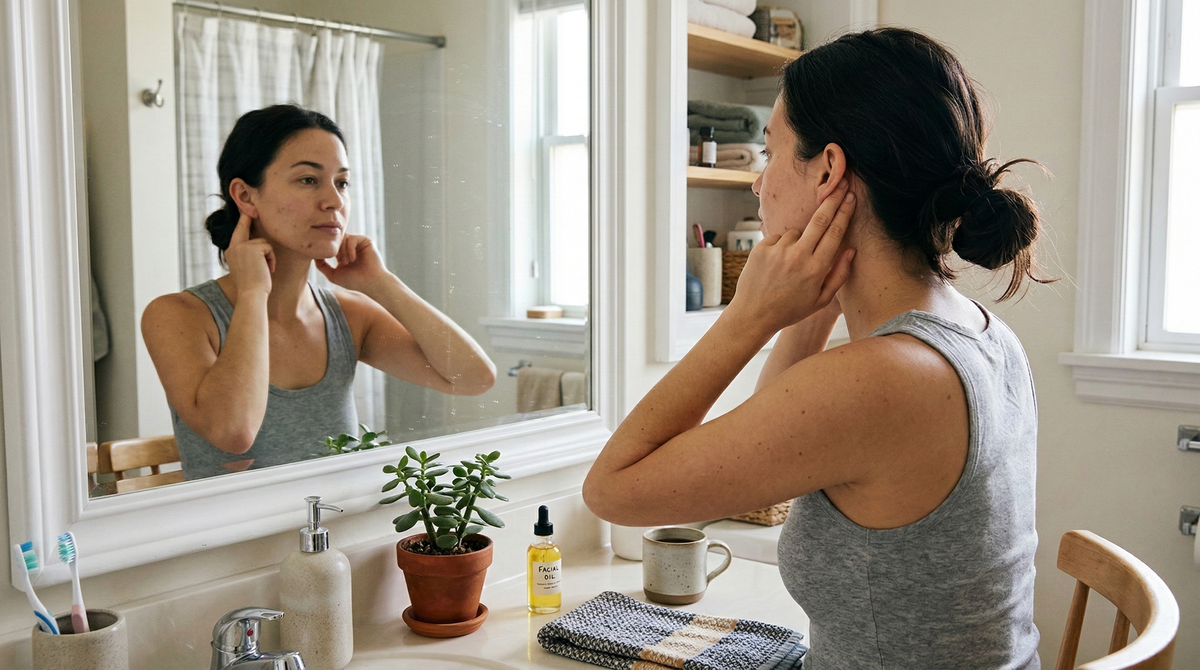
Make a V-shape with your fingers, lock them behind your ears, and move in a gentle circular motion. 10 rubs each side.
You can literally feel everything de-puffing as you do this.
There are so many lymph nodes packed into this area - it clears waste from your brain and your face.
3. Nasal And Cheeks
For this one, you'll start right where the bridge of your nose meets the corner of your eyes, and run your fingers down the sides of your nose. From there, sweep outward across your cheeks toward your ears. 10 times.
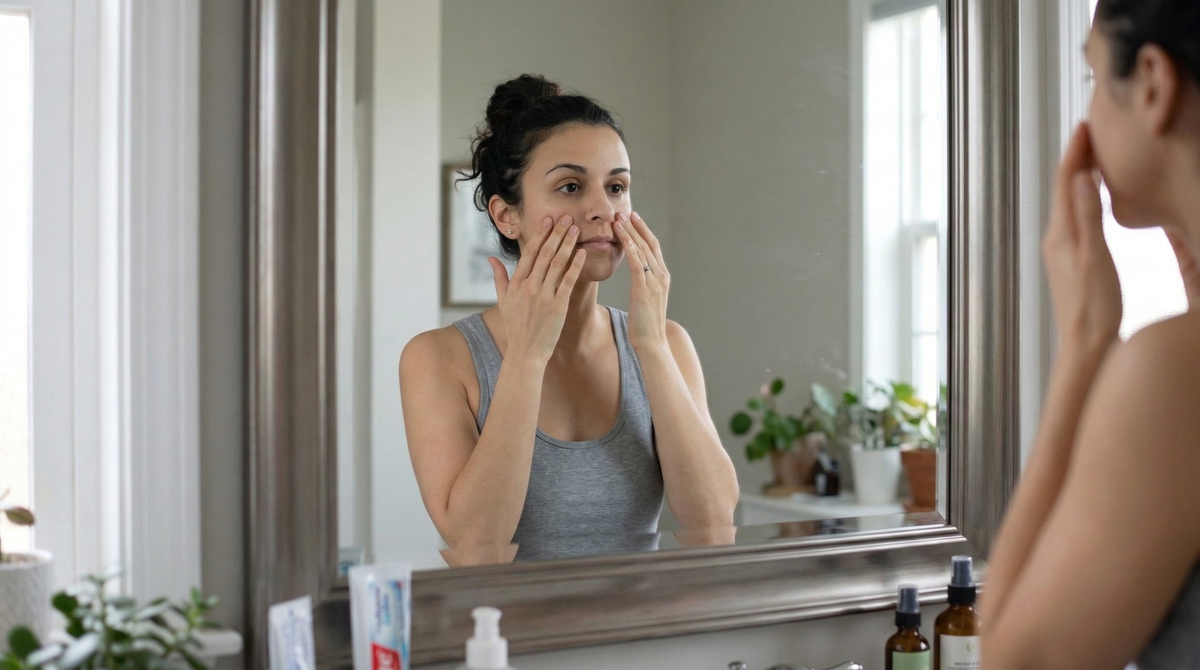
This helps drain the sinuses and move fluid out of the face.
If you deal with sinus congestion, head pressure, or puffiness, this is a really important one.
A lot of people skip this because they don't think of the face as part of the routine, but there are lymph pathways all through your face.
4. Neck
For this one, you're working the sides of your neck, running from just under your ears down toward the collarbones. Gentle circles or up-and-down rubs - whatever works for you. 10 times.
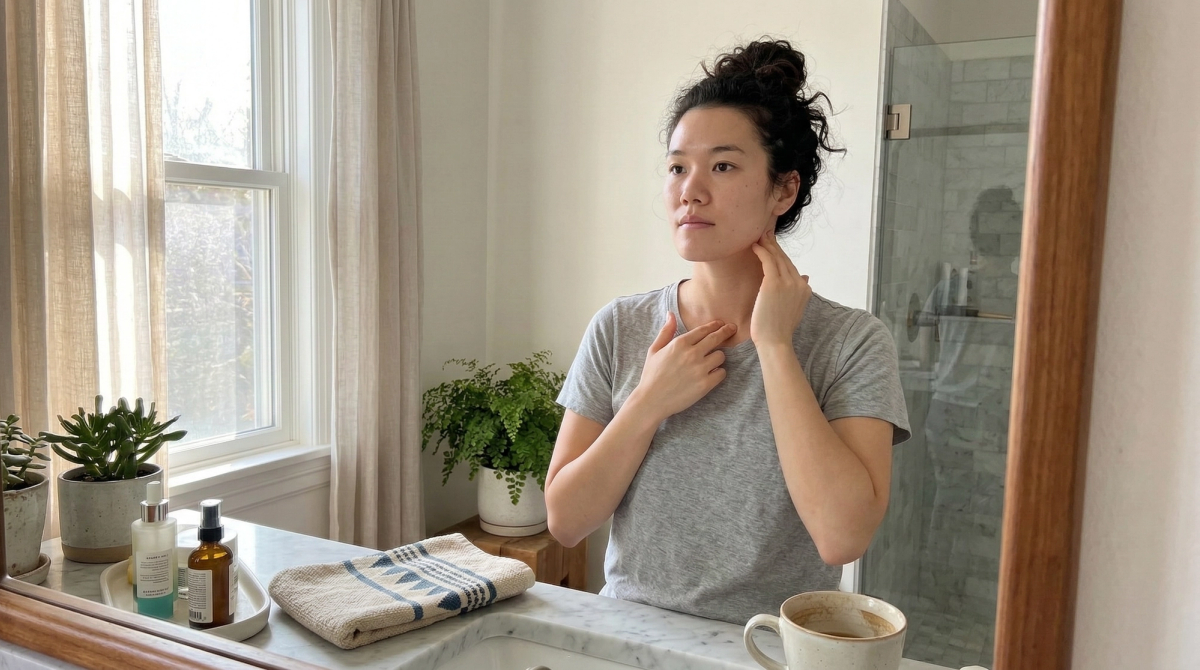
Be quite gentle with this area. If you're really puffy in your face, give yourself a little extra light massage along the jawline too.
You might notice yourself swallowing more as you do this - that's your lymph system actually draining.
5. Armpits
For this one, open your arm up and pop your hand into the armpit hollow - the soft, concave area right in the crease where your arm meets your torso.
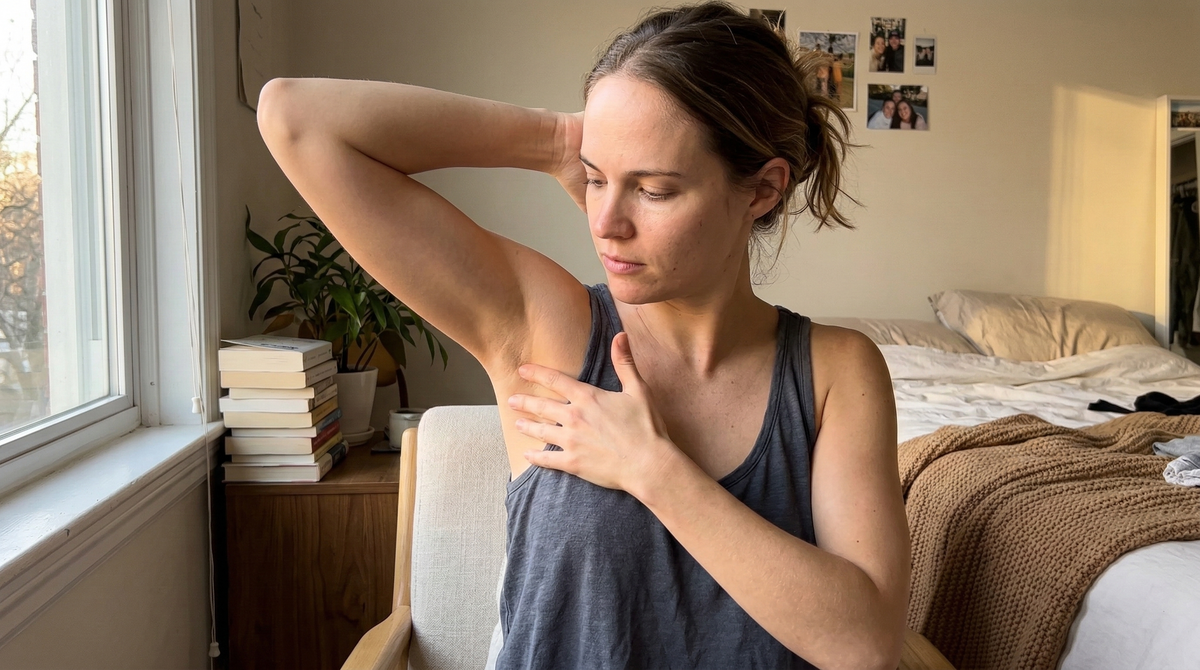
Rub in a light circular motion, almost like a gentle pumping sensation. 10 to 15 times each side.
There are 30 to 50 lymph nodes in each armpit - this is where your lymph filters your chest, breast tissue, and arms.
Also a good time to have a feel for any unusual lumps or bumps.
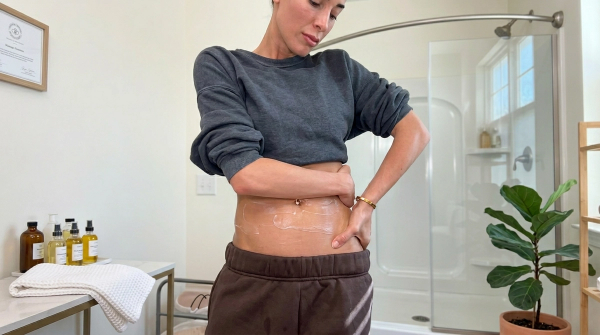
6. Abdomen
For this one, you'll place one hand above the belly button and one hand below. You're covering the whole midsection.
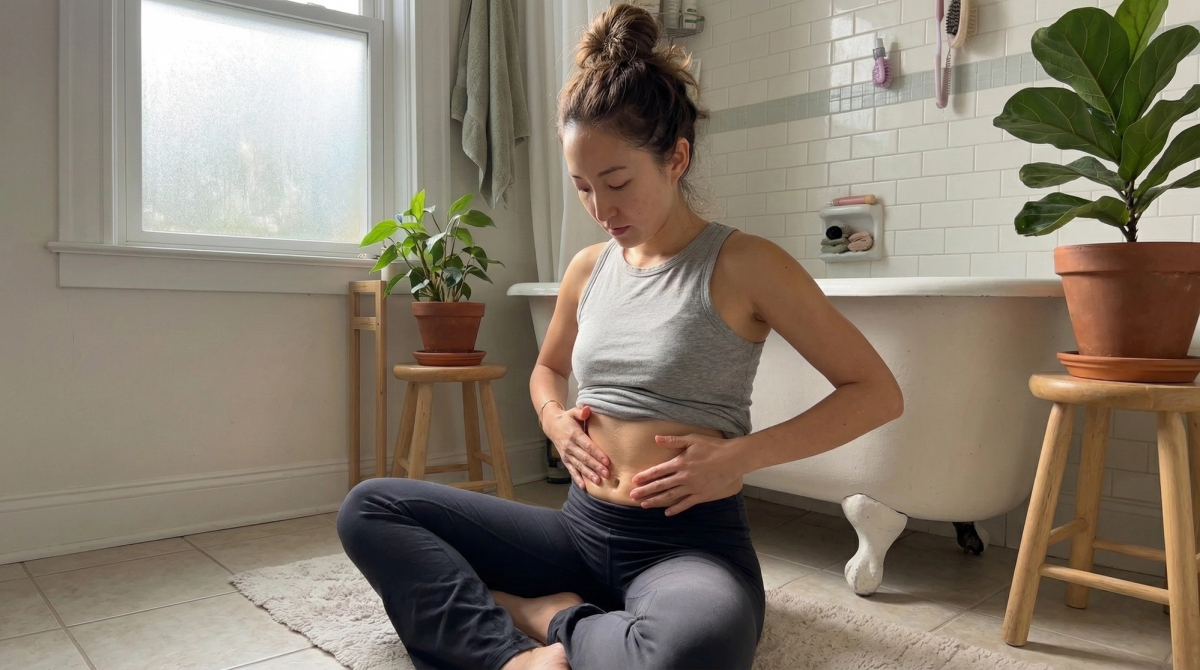
Gently rub in a circular motion - up and down, side to side, or circles. 10 times.
Some people like to do a few back-to-front rubs first because it's really good for your kidneys.
When you get into the circular motion, push in on your belly button a little bit. You can apply more pressure here than the other points.
This supports your gut flow, liver function, and hormone balance.
7. Groin
For this one, you'll find the spot right where your pants crease - the inner crease where your leg meets your pelvis. Lightly rub down the sides, 10 to 15 times each.
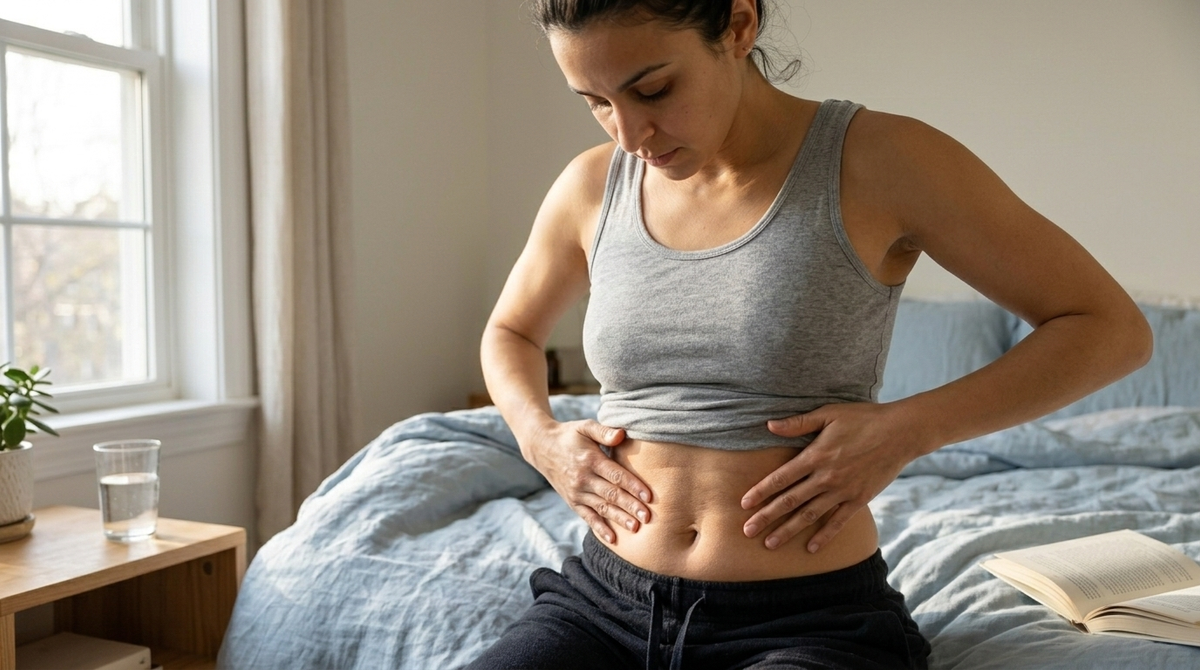
If you're feeling extra puffy, go back and forth a few more times.
This is the body's largest lymph node cluster - critical for your legs, hips, and reproductive health. Often completely ignored. Give this area some love.
8. Behind The Knees
For this one, you're targeting the soft area directly behind your kneecaps, where your leg bends. You can do this sitting down, but I prefer standing.
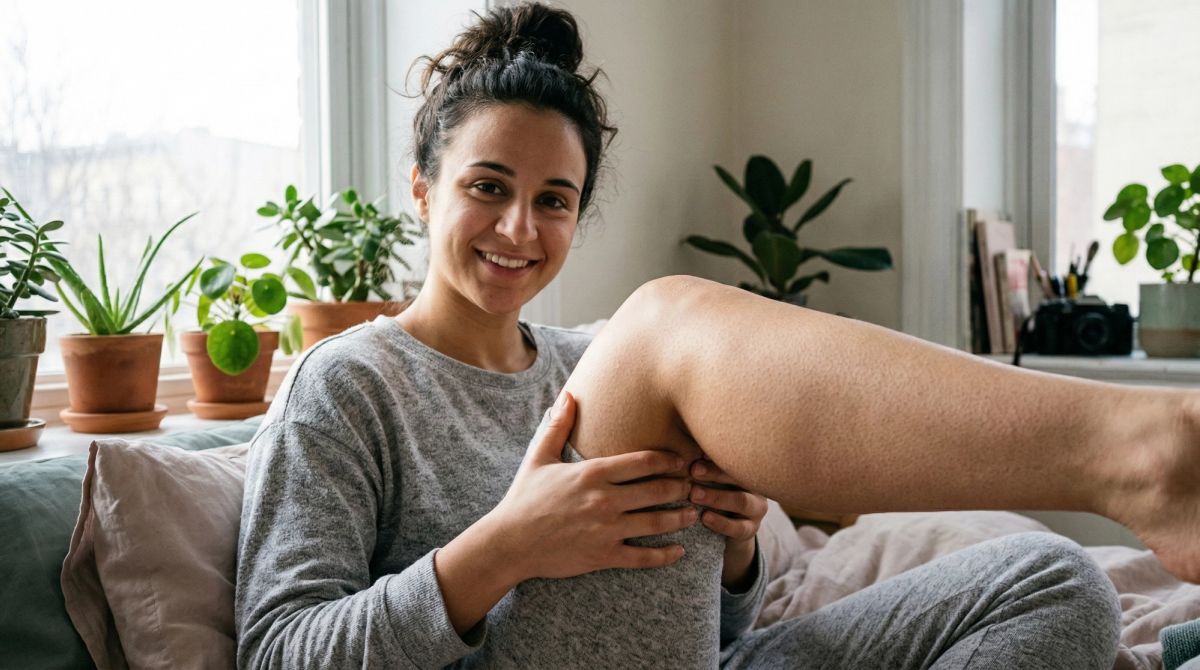
Circular motions or up-and-down rubs, 10 to 15 times each side.
You're basically doing what you did with your armpits, but behind your knees.
Everyone forgets this one. It drains the fluid from your lower legs and feet - especially important if you sit or stand all day long.
9. Calves
For this last one, you're working the back of your lower legs, from behind the knees all the way down toward your ankles.
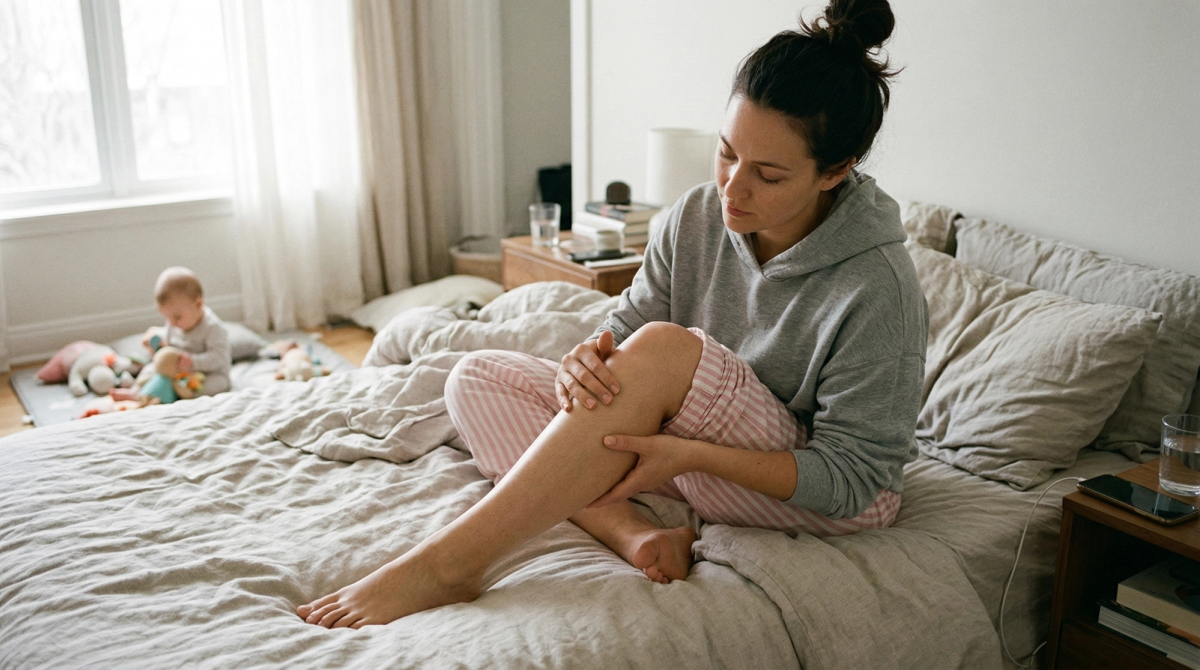
Use both hands to rub up and down along the back of each calf, 10 times per leg. Work the fluid upward toward the knees.
Think of your calves as the last stretch of the drain - if this part is clogged, all that fluid just sits in your feet and ankles.
Got swollen ankles? Don't skip this.
If 9 points feels like a lot, just start with the core 6: collarbones, behind your ears, armpits, abdomen, groin, and behind the knees. Add the rest when you're ready.
Once you've finished, you can also do light sweeping strokes down your arms and legs with flat hands to give the fluid one final push through the pathways you just opened.
When To Do Lymphatic Drainage Massage
There's no wrong time. The whole routine takes about three minutes, and you can do it daily or a few times a week.
Here's what works best:
- First thing in the morning - de-puffs overnight fluid retention and sets you up with energy for the day (this is when I do it)
- Before a workout- primes your lymphatic system and gets everything flowing before you start moving
- After a long day of sitting or standing - clears the sluggishness that builds up from being in one position too long
- Before bed- works well as a calming wind-down routine
- After a flight or travel day - helps with the puffiness and heaviness that comes from sitting in a cramped space for hours
The point is consistency, not timing. Pick a time that fits your schedule and stick with it.
Final Thoughts
Lymphatic drainage massage is a 3-minute daily habit that costs nothing and requires zero equipment.
The potential upside - less puffiness, better energy, improved digestion, reduced stiffness - is hard to ignore for something this simple.
Start with the core 6 points if the full 9 feels like too much. Build from there. Give it two weeks of consistent effort and see how you feel.
If you want to explore lymphatic drainage even further, the 3-minute self-massage is just the starting point.
Full-body movement - especially exercises designed to stimulate lymph flow through muscle contraction and gravitational pumping - takes things to the next level.
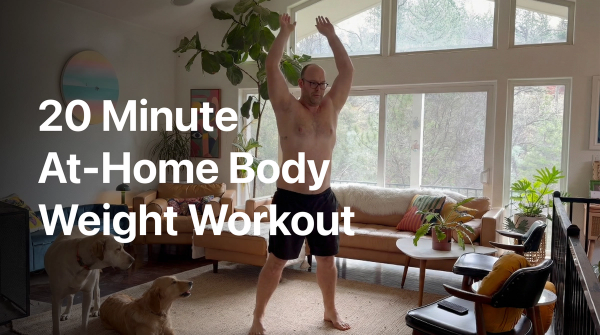
Here's a full daily routine that starts with lymphatic hops and builds from there:
- Full workout guide - breaks down every movement and the reasoning behind the sequence
- Follow-along workout video - press play and do the full 20-minute routine with me in real time
- Slow day follow-along video - a gentler version for days when your body needs to take it easy
- My diet & how I'm eating - the eating philosophy I pair with the routine to reduce inflammation
If you do end up giving it a try (or have any questions)? Please send me a DM on Instagram.
![The 18 Best Exercises for Lymphatic Drainage [2026]](https://cdn.sanity.io/images/n447j2xf/production/97fd5b6fde80019cc31ef0a5c3933e7359536bd7-1920x1059.png?w=600&auto=format&q=75)